
Can Bag-in-Box White Wine Stay Fresh Outside the Fridge?
Quick answer
Unopened bag-in-box white wine can usually be kept in a cool, dark place until the date recommended by its producer. Once opened, refrigeration is the better choice for preserving flavor.
A properly functioning bag and tap reduce the air that enters during dispensing, but they cannot stop every change in the wine. If an opened box must stay outside the fridge, keep it in the coolest available place and check the wine sooner than you would if it were chilled.
The often quoted two to four weeks in a cool room and four to six weeks in a fridge are useful planning ranges, not promises. The actual period depends on the wine, its filling conditions, the package, and the temperature it experiences.
Start with whether the box has been opened
If the box is unopened
- Find the packaging or best-before date and follow the wine producer's instructions.
- Choose a cupboard or cellar away from a radiator, oven, and direct sunlight.
- Boxed wine is intended to be enjoyed relatively young. The bag limits oxygen exposure, but flexible films do not provide the same long-term barrier as glass.
How long can an unopened box last?
Six to twelve months is sometimes cited for unopened boxed wine, but the producer may set a shorter window. Heat during storage or transport also matters.
Use the date and directions for the wine you bought. Published instructions for individual boxed wines range from seven months to about a year before opening.
If the box has been opened
Each pour moves wine through the tap, while the bag contracts around what remains. Unlike an opened bottle, the box does not need to replace every poured glass with an equal volume of air.
That helps, but it does not make the system permanently airtight:
- Oxygen can enter through the film and closure over time.
- Air picked up during filling was already present before the first glass was poured.
What if the carton will not fit in the fridge?
Refrigerate an opened box when you can. If the carton does not fit, check whether its bag can be safely positioned with the tap supported. Do not detach the tap or transfer the wine just to make space. Moving it introduces air.
| Storage situation | Practical expectation | What to do |
|---|---|---|
| Unopened, cool and dark | Best starting point for the producer’s stated shelf life | Follow the package date and storage directions |
| Opened, refrigerated | Better protection of aroma and flavor | Note the opening date and keep the tap clean |
| Opened, cool pantry | May remain enjoyable for a shorter period | Taste and smell it regularly, and follow brand guidance |
| Opened, warm or sunny room | Faster quality loss is likely | Move it somewhere cooler promptly |
How long can opened white wine stay outside the fridge?
In a cool, dark space
There is no single room-temperature countdown. Two to four weeks may be a reasonable period to plan around for some bag-in-box white wines.
It is not a tested guarantee for the box in your kitchen. A room that feels comfortable in winter can become much warmer in summer. Sunlight and heat from appliances create additional hot spots.
In the fridge
Chilled storage gives opened wine a better chance of retaining its intended character. Some finished-wine brands advise drinking their boxed wines within about a month or up to six weeks after opening. Other guidance is more conservative. Those numbers describe particular wines and storage assumptions, not every white wine in every bag.
If you left the box out
- Overnight: Move it somewhere cooler and inspect the next pour.
- For days in a hot room: Be more cautious.
- Regardless of the time: Use the opening date as a prompt to check quality. A box kept near an oven may lose freshness faster than one stored longer in a consistently cool place.
What should you check before serving?
Look for darkening, muted fruit, or sharp, stale, vinegar-like notes. Stop serving wine with off flavors. Do not taste from a leaking, swollen, or damaged pack.
Why the bag helps, and why temperature still wins
The bag reduces air entering during a pour
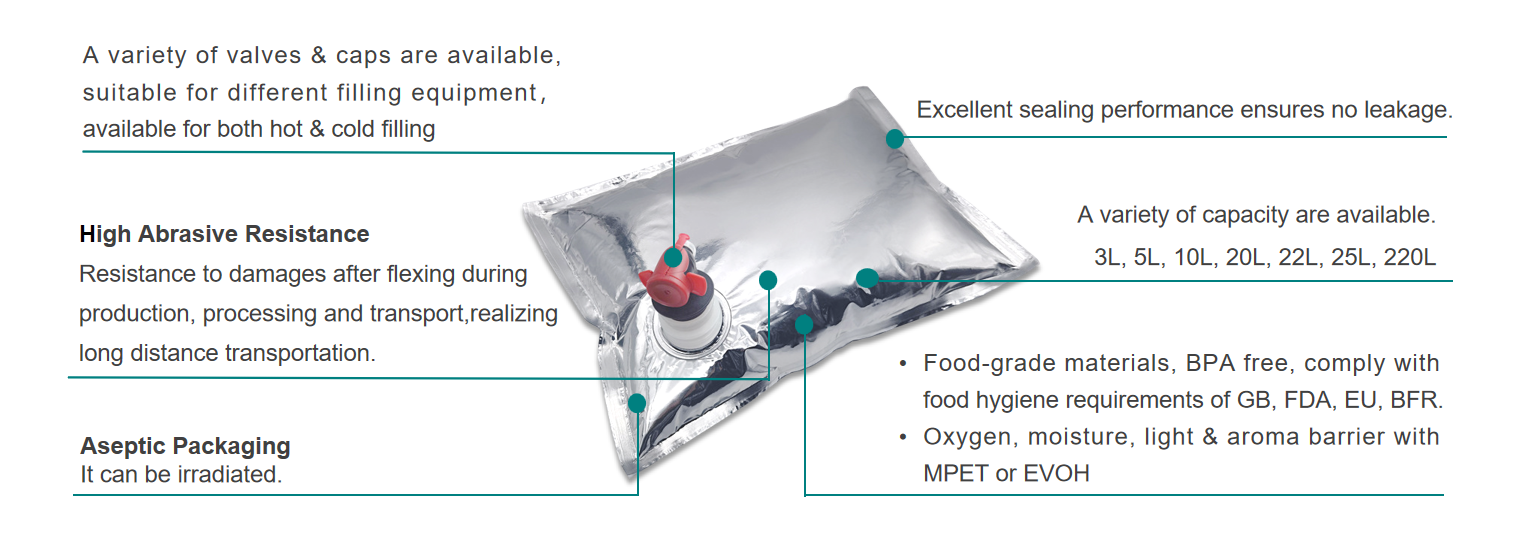
Bag-in-box packaging combines a flexible inner bag, a dispensing fitment, and a supporting carton. As the wine leaves, the bag contracts.
The carton protects it from light and physical damage. The film and tap determine how much oxygen can reach the wine during storage and use.
Each part has a different job
- Film: Limits oxygen passing through the bag wall.
- Fitment: Must close reliably after repeated pours.
- Seals: Help the filled package survive handling.
- Filling process: Must limit oxygen introduced before the bag is sealed.
None of these features can compensate indefinitely for poor storage conditions.
What does the temperature research show?
A published study followed Chardonnay in several packaging types at different temperatures for three months. Rising storage temperature produced the largest overall changes.
At 40°C, bag-in-box samples developed more oxidized and vinegar aromas and a yellower color. This was a heat exposure experiment. It does not establish when an opened box at ordinary room temperature will lose freshness, but it shows why a warm supply route or sunlit shelf deserves attention.
Three storage situations you may actually face
- At home: A three-liter box holds the equivalent of four 750 mL bottles. Write the opening date on the carton. If it cannot be refrigerated, use a cool cupboard and check the wine regularly.
- At an event: Keep the box away from sun and heat-producing equipment. Return it to cool storage after service and check that the tap stays clean.
- At a restaurant: Rotate stock by the producer's dates, record each opening date, and tell staff when to check aroma and remove a box from service. Specify actual dispensing conditions when selecting packaging.
What wineries should ask of a bag-in-box packaging manufacturer
For a winery, an opened-life claim must be supported by the filled system and its route to the customer. Tell your packaging partner the wine, fill volume, filling equipment, shipping temperatures, intended storage time, and dispensing method. Retail wine may need different testing from wine poured quickly in foodservice.
Then review four practical points:
- Barrier: Request oxygen transmission data and its test conditions for the proposed film.
- Fitment: Check filler compatibility, leakage, closure, and repeated pours.
- Transport: Test seals and carton fit with filled samples under realistic handling.
- Finished wine: Assess aroma, color, and quality during storage and dispensing. Base printed advice on the results for your wine.
LDPACK offers bag-in-box formats for wine and other liquids, with multilayer film, taps or spouts, and standard or custom structures. Its published range spans 1 L to 220 L across liquid applications.
Specify your retail or foodservice size and discuss a matching film and fitment. The available mono-material PE option still needs evaluation against barrier requirements and local recycling arrangements.
The carton should state how to store the unopened wine, what to do after opening, and the period validated for that wine.
FAQ
Q1. Does unopened bag-in-box white wine need to be refrigerated?
A: Usually not if the wine producer permits cool, dark storage. Check the date and instructions on the box, and keep it away from sunlight and heat. Chill it before serving if you prefer.
Q2. How long does boxed white wine last after opening without refrigeration?
A: In a genuinely cool, dark place, two to four weeks may be a planning range for some wines. It is not a guaranteed period. A warmer room can change the wine faster, so follow the producer's guidance and check its aroma and appearance regularly.
Q3. Should I refrigerate boxed white wine after opening?
A: Yes, if you have space. Refrigeration helps preserve flavor after opening, even though the bag contracts as wine is poured. Record the opening date and keep the tap clean and fully closed between pours.
Q4. Is boxed white wine still good if I left it out overnight?
A: One night outside the fridge does not establish that the wine has lost its freshness. Move the box somewhere cooler and check the next pour. Be more cautious if it stood near a heat source or in direct sun. Do not taste wine from a leaking, swollen, or damaged pack.
Q5. Can I refrigerate the inner bag without the carton?
A: Only if the package design allows the filled bag to be positioned safely with its tap supported. Do not remove the tap or transfer the wine simply to save space, as handling can introduce air.
Q6. How can I tell whether boxed white wine has lost its freshness?
A: Check for a darker color, muted fruit aroma, or sharp, stale, vinegar-like notes. Stop serving wine with off flavors. The date alone cannot tell you how a box handled heat or storage after opening.
Conclusion
Bag-in-box white wine can stay outside the fridge, but conditions matter. Keep unopened boxes in a cool, dark place and follow producer guidance. Once opened, refrigeration better preserves flavor. A cool pantry may work for a limited time, while heat speeds oxidation despite the bag contracting as wine is poured. Record the opening date, check aroma and follow the brand's guidance. For wineries, shelf-life claims should come from tests of the filled wine, film, tap, and storage conditions.