
EU PPWR 2025/2026 Compliance Guide for Liquid Food Brands: What Your Bag-in-Box Packaging Must Meet
If your company sells wine, juice, dairy products, fruit purée, syrups or sauces in the EU, the first question is not whether Bag-in-Box packaging is "sustainable." It is whether your exact packaging system can be supported by the material, food-contact and technical evidence required under Regulation (EU) 2025/40.
The Packaging and Packaging Waste Regulation (PPWR) entered into force on 11 February 2025 and generally applies from 12 August 2026. It covers packaging placed on the EU market whether it is made inside or outside the EU. Bag-in-Box is not prohibited as a format, but neither a recyclable cardboard box nor a mono-material claim makes the complete pack automatically compliant.
This guide shows what to check in the outer box, inner liquid bag, tap, inks and adhesives; what applies now; and what liquid food brands should prepare for 2030. It is educational guidance, not a substitute for product-specific legal or food-contact review.
Start with a Component-by-Component Review
PPWR Article 6 requires the recyclability assessment to cover all components. Separate components are assessed separately, while integrated components must not prevent the main body from being collected, sorted or recycled. For Bag-in-Box packaging, this makes separability a design question, not simply a disposal instruction.
| Component | What the brand should confirm | Common gap |
| Corrugated outer box | | Board grade, coatings, inks, adhesives, weight and separation instructions | "The box is recyclable" is treated as proof for the whole pack |
| Flexible inner bag | Full layer structure, thickness, food-contact layer, barrier materials and target recycling stream | The specification lists only "multilayer film" |
| Tap, valve and fitment | Polymer type, weight, food-contact status, separation and compatibility with the liner's recycling stream | The fitment is missing from the bill of materials |
| Labels, inks and adhesives | Composition, location, food-contact relevance and possible recycling impact | Small components are assumed to be irrelevant |
A bag-in-box packaging manufacturer should supply a controlled bill of materials, component weights, drawings, separation instructions and declarations tied to the supplied version.
Requirements That Matter from 12 August 2026
PFAS and heavy metals
Food-contact packaging cannot be placed on the EU market at or above the PPWR PFAS thresholds: 25 micrograms per kilogram for any targeted PFAS, 250 micrograms per kilogram for the sum of targeted PFAS, and 50 milligrams per kilogram for PFAS including polymeric PFAS. The combined concentration of lead, cadmium, mercury and hexavalent chromium must not exceed 100 mg/kg.
The finished unit can include films, coatings, inks, adhesives and the fitment. Because there is not yet one harmonised EU PFAS test method for food packaging, ask what was tested, which method was used and whether the sample matches production. A one-line "PFAS-free" statement is weak evidence.
Food-contact compliance still applies
PPWR does not replace Regulation (EC) No 1935/2004, plastic food-contact Regulation (EU) No 10/2011 or GMP Regulation (EC) No 2023/2006. A food packaging manufacturer must match migration conditions to the food, contact time and temperature. Aseptic filling flexible packaging and dairy or sauce applications must also preserve sterility, seals, flavour and shelf life.
Build for 2030 Without Misstating Today's Rules
| Milestone | What it means for a BIB project |
| 12 August 2026 | PPWR generally applies; manufacturers need conformity assessment, technical documentation and an EU Declaration of Conformity for applicable requirements |
| 12 August 2028, or the later date set by Article 12 | Harmonised material-composition labels begin to apply, subject to the implementing-act timetable |
| 1 January 2030, or the later statutory trigger | Design-for-recycling grades and plastic recycled-content requirements begin to apply |
| 1 January 2035, or the later statutory trigger | Recycled-at-scale performance becomes part of the recyclability assessment |
| 1 January 2038 | Packaging must reach Grade A or B rather than relying on Grade C |
Grades A, B and C correspond to at least 95%, 80% and 70% recyclability by weight. Below 70% is technically non-recyclable; the final regulation does not define mandatory D or E grades.
The 2030 recycled-plastic targets are generally 30% for contact-sensitive packaging mainly made from PET and 10% for other contact-sensitive plastic packaging, excluding single-use beverage bottles. The trigger is 1 January 2030 or three years after the relevant implementing act, whichever is later. A PCR packaging supplier must still demonstrate food-contact safety and traceability.
The 50% empty-space limit is not a universal 2026 rule for every BIB outer box. Article 24 applies to grouped, transport and e-commerce packaging from 2030 or its later trigger. Brands should still avoid unnecessary weight and volume without compromising food protection.
Multilayer or Mono-PE: Choose by Product Risk
Moving from a multilayer liner to mono-PE may simplify the intended material stream, but it does not automatically create PPWR compliant packaging. The structure still depends on oxygen sensitivity, fat or acid content, filling process, storage, shelf life and the valve.
A Mono PE packaging supplier should disclose the full construction, not only the dominant polymer. For oxygen-sensitive liquids, request OTR data with stated test conditions. For viscous products, test evacuation, seals and the valve with the actual recipe. Recyclable high barrier packaging needs both barrier evidence and a defensible end-of-life route.
Risks also differ by use. Wine and juice are sensitive to oxygen; foodservice sauces add viscosity and oil or acid resistance; dairy may require chilled or aseptic processing; fruit purée flexible packaging may require hygienic filling and strong transport performance.
The Documentation File Brands Should Build
PPWR manufacturers must complete the applicable conformity assessment, Annex VII technical documentation and an Article 39 EU Declaration of Conformity. "Manufacturer" can include the company that has the packaging or packaged product made under its name, subject to exceptions. Buying a pack does not automatically transfer every obligation to the converter.
For each packaging type, maintain:
1. A bill of materials covering layers, weights, inks, adhesives and fitments.
2. Intended food, filling conditions, storage and shelf life.
3. Food-contact declarations and migration support.
4. PFAS and heavy-metal evidence identifying the method and sample.
5. Recyclability evidence, target collection stream and separation instructions.
6. Barrier, seal, leak, transport and filling-line test reports.
7. Version, batch and supplier traceability.
EPR is a separate workstream. Registration, reporting and representative duties depend on the producer definition and member state. Multi-market brands should verify each national process rather than assume one EU-wide registration is sufficient.
How to Select a Bag-in-Box Supplier
When comparing a flexible packaging supplier, liquid pouch packaging supplier or bulk liquid flexible packaging supplier, ask questions that can be answered with records:
Can you provide the full liner and fitment structure with component weights?
Which food-contact, PFAS and heavy-metal evidence applies?
How should consumers separate the box, liner and tap?
What recycling stream is intended, and what limitations apply by country?
Which barrier, leak, transport and filling tests were run?
How are specification changes approved?
Be cautious if the answer is only "recyclable," "eco-friendly" or "PPWR certified." PPWR does not create a universal product certificate. A dependable supplier should state what is proven, what needs testing and what depends on future EU methods.
Applying the Checklist to an LD PACK Project
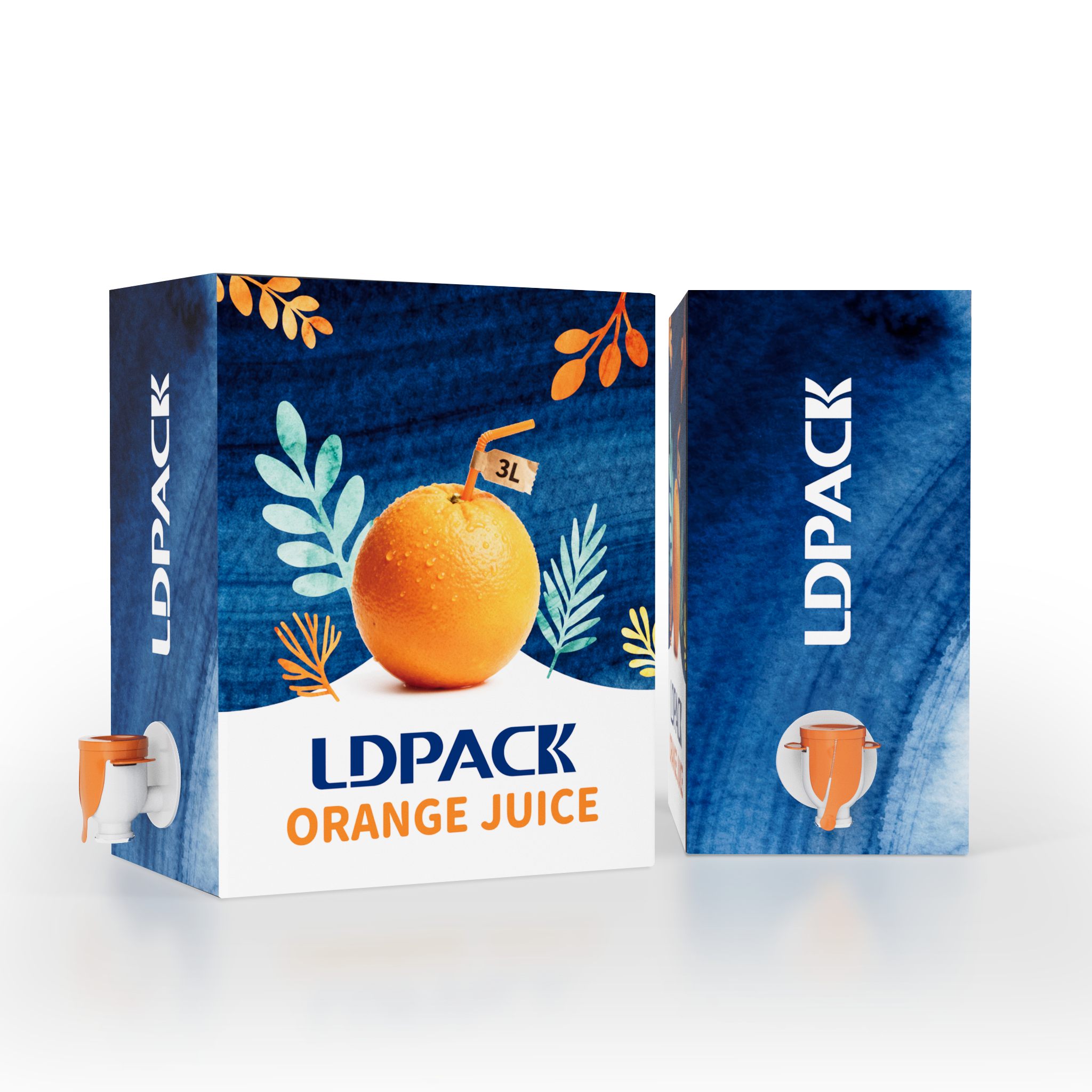
LD PACK's range covers 1 L to 220 L formats for wine, juice, dairy, sauces and bulk liquids, with multilayer films, taps or spouts, custom structures and mono-PE candidates. As a flexible packaging manufacturer in China, LDPACK also reports in-house printing, lamination, pouch-making and R&D.
Before recommending a structure, the project team should collect pH, viscosity, oxygen sensitivity, filling temperature, pack size, shelf life, distribution conditions and filling-equipment details. The output should be a candidate structure and test plan, not an unsupported "PPWR-ready" label.
The EU generated 186.5 kg of packaging waste per person in 2022, and 40% of plastics used in the EU go into packaging. Material reduction matters, but not if it increases leakage, spoilage or food waste.
FAQ
Q1. Is Bag-in-Box packaging banned by PPWR?
A: No. It restricts certain formats and uses, not Bag-in-Box as a whole. Check the product, capacity, channel and use case.
Q2. Is a mono-PE liner automatically compliant?
A: No. The fitment, food-contact evidence, barrier performance, labelling, documentation and local recycling route still matter.
Q3. What should a brand do first?
A: Map each packaging type, obtain the component specification and identify missing food-contact, PFAS, recyclability and performance evidence before considering redesign.
Conclusion
The practical question is whether the exact box, liner and fitment protect the food and have component-level evidence. Start before the next EU order, especially if the specification says only "multilayer bag."
Send LDPACK your specification, filling conditions, shelf-life target and EU market to discuss a custom Bag-in-Box packaging and test plan.