
How to Design a Retort Pouch for Your Product
Designing a retort pouch should start with the food product and processing conditions rather than with a film structure. Before selecting materials, define the product characteristics, fill weight, retort temperature and time, target shelf life, storage conditions, and filling method. These factors help determine the pouch format, dimensions, barrier level, laminate structure, thickness, and seal design.
A practical development sequence is: Product requirements → Retort process → Pouch format → Size → Barrier → Film structure → Seal design → Filling trial → Retort trial → Validation
Following this sequence helps reduce unnecessary sampling and makes it easier to build a pouch specification that matches both the product and the production process.
Start With the Product and Processing Requirements
Different foods can require very different retort pouch structures, even when the fill weight is similar. A smooth sauce behaves differently during filling and retorting than meat with bones, seafood with shells, or a meal containing large particles. Product characteristics can influence puncture resistance, seal performance, oxygen protection, filling behavior, and package dimensions.
Before discussing materials, define the following information:
- Product type
- pH and relevant food properties
- Oil or fat content
- Viscosity
- Particle size
- Presence of bones, shells, or sharp ingredients
- Fill temperature
- Net weight and fill volume
- Target shelf life
- Expected storage and distribution conditions
A simple way to evaluate these requirements is to connect each product characteristic with a packaging concern.
| Product condition | Packaging concern |
|---|---|
| Oily sauce | Oxidation resistance and seal contamination |
| Soup | Filling control, residual air, and seal cleanliness |
| Meat with bones | Puncture resistance |
| Light sensitive food | Light barrier |
| Large food particles | Filling, package strength, and thermal processing |
Match the Package to the Retort Process
Retort conditions should be confirmed before the final pouch structure is selected. Temperature is only one part of the process. Processing time, pressure, cooling conditions, product thickness inside the pouch, and the retort system can all affect package performance.
For high temperature applications, pouch structure needs to maintain seal integrity, dimensional stability, and barrier performance through the intended thermal cycle.
The final package should therefore be matched to the actual processing conditions rather than selected on the assumption that one structure will perform equally well under every retort cycle.
For food safety and process validation, the thermal process should be established for the specific food, package format, processing equipment, and target shelf stability.
Select a Pouch Format That Fits the Product and Filling Line
Pouch format affects filling efficiency, heat transfer, shelf presentation, dispensing, and production handling.
Flat Pouches
Flat retort pouches are commonly used for ready meals, meat products, seafood, sauces, and portion packs. Their relatively thin profile can support efficient heat transfer when the process is developed around the final package geometry.
Stand Up Pouches
Stand up formats provide a larger display area and a convenient retail presentation. Gusset depth, fill volume, product weight, and filling equipment should all be considered during development.
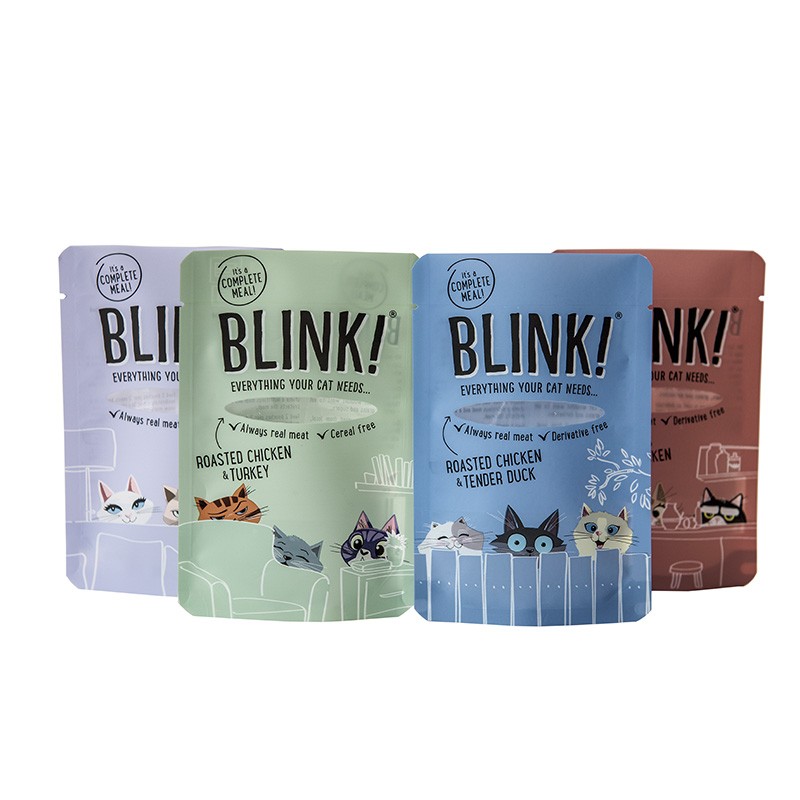
Retort Stand Up Pouches for Wet Pet Food
Retort Spout Pouches
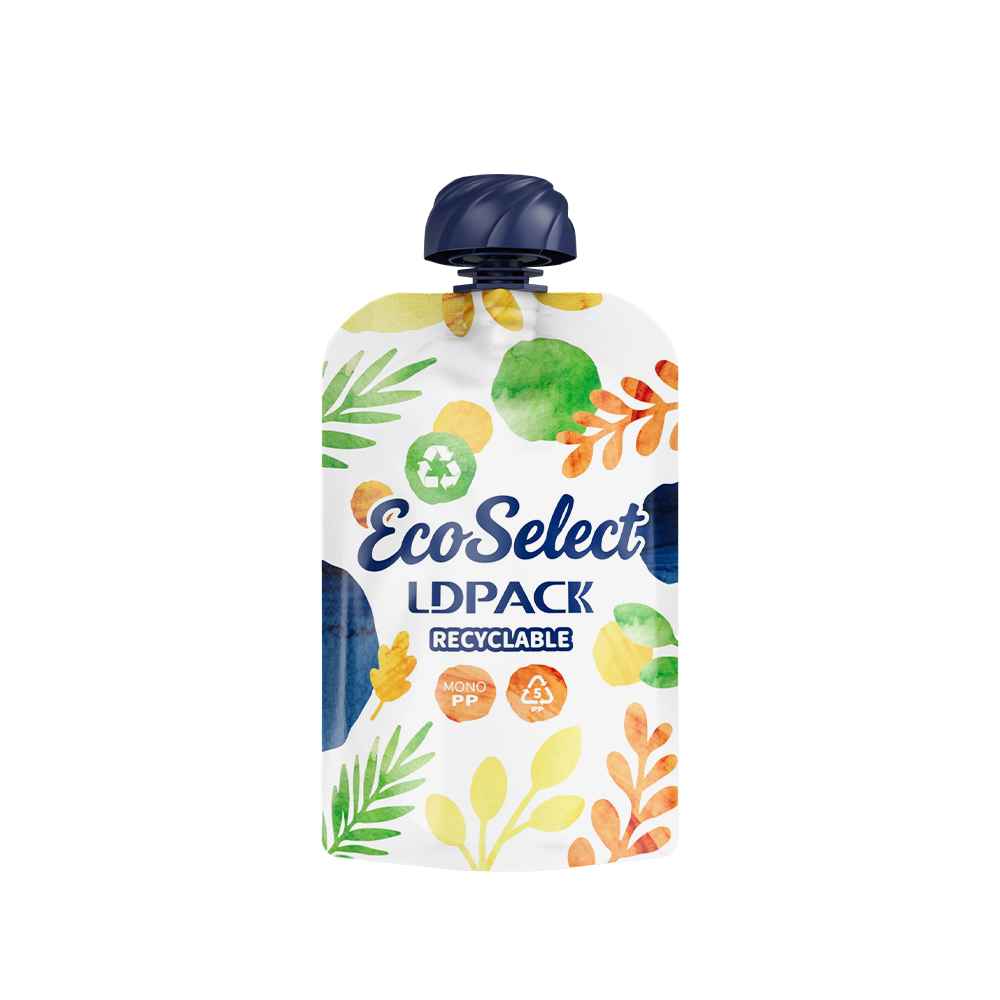
Spouted formats can work well for liquid and semi liquid foods that require controlled dispensing. Spout material, closure design, pouch structure, filling temperature, and retort compatibility should be evaluated together.
The best format is the one that fits the product, filling process, handling requirements, and end use.
Build the Right Size Around Fill Volume and Process Needs
Net weight alone is not enough to determine pouch dimensions. A 250 g soup and a 250 g chunky meat product may have very different volumes and behave differently during filling and thermal processing.
Pouch dimensions should consider:
- Product density
- Actual fill volume
- Particle size
- Required headspace
- Seal area
- Gusset depth, when used
- Filling equipment
- Package behavior during retorting
Overfilling can increase the risk of contamination around the seal area and can also change product thickness inside the pouch. Final dimensions are therefore better confirmed through actual filling trials rather than selected from a standard size chart alone.
Set Barrier Targets Based on Shelf Life and Product Sensitivity
Barrier requirements should reflect the food, shelf life target, and storage environment. A higher barrier is not automatically the right choice for every product. The package needs enough protection for the actual product and expected distribution conditions.
Oxygen Protection: Foods containing fats, oils, sensitive flavors, or oxidation prone ingredients may require stronger oxygen protection. OTR can be used as one reference when comparing structures.
Moisture Protection: WVTR helps describe moisture transmission through the package. The required level depends on whether moisture gain or moisture loss could affect product quality during storage.
Light and Aroma Protection: Light sensitive products may need opaque or foil based structures. Other products may benefit from transparent high barrier materials when product visibility is important.
Barrier selection should therefore be linked to shelf life goals and product sensitivity rather than treated as a standalone film specification.
Turn Performance Requirements Into a Film Structure
Once performance requirements are clear, the film structure can be built around the required functions.
A practical way to approach structure selection is: Required function → suitable material function → complete laminate structure
For example, puncture resistance may require a tougher structural layer. Strong light protection may point toward an aluminum foil structure. Retort sealing requires a sealant layer that can maintain integrity through filling and thermal processing.
| Structure approach | Main benefit | Consider when |
|---|---|---|
| Foil laminate | Strong light and gas barrier | Long shelf life or light sensitive foods |
| Transparent high barrier | Product visibility | Visibility matters and barrier targets can be achieved |
| Reinforced multilayer | Mechanical strength | Chunky or sharp foods |
| Mono material PP | Simplified material composition | Sustainability is a project requirement and performance can be validated |
Structure selection should always be based on the final product, processing conditions, and target performance.
Balance Film Strength, Flexibility, and Thickness
There is no single correct thickness for every retort pouch. Thickness should be considered together with the complete laminate structure, not as an isolated specification.
Important factors include:
- Fill weight
- Pouch dimensions
- Puncture risk
- Product shape
- Retort conditions
- Distribution and handling stress
A thicker pouch does not automatically solve a puncture or seal problem. Material selection, layer combination, and structural design are equally important.
The final thickness should therefore be selected after considering the product, package geometry, and intended processing conditions.
Design the Seal for Real Production Conditions
A suitable laminate can still fail if the sealing system does not match actual production conditions.
Important factors include:
- Sealant material
- Seal width
- Seal surface condition
- Sealing temperature
- Jaw pressure
- Dwell time
- Wrinkles in the seal area
- Product contamination around the seal
Food, grease, moisture, or product residue in the seal area can weaken the final seal.
Seal design should therefore be considered before the final packaging specification is approved, especially for oily, liquid, or particulate foods.
Make Sure the Pouch Works on Your Production Line
A pouch must perform well during retorting, but it also needs to run reliably through filling and sealing equipment.
Confirm details such as:
- Manual or automatic filling
- Pouch opening requirements
- Filling nozzle dimensions
- Fill temperature
- Sealing equipment
- Production speed
- Pouch feeding method
- Spout position, when applicable
Products with sauces, fibers, large particles, or high viscosity may create additional challenges around filling accuracy and seal cleanliness. A production line trial helps confirm that the pouch is practical before commercial scale production begins.
Validate the Complete Package Before Scaling Up
A material specification sheet alone is not enough to confirm final pouch performance. A more reliable process uses the actual product and intended manufacturing conditions:
Prototype → Filling trial → Sealing trial → Retort trial → Cooling → Inspection → Package testing
Depending on the application, validation may include:
- Visual seal inspection
- Seal integrity testing
- Leak testing
- Delamination inspection
- Puncture assessment
- Handling or compression evaluation
- Barrier testing where relevant
- Shelf life studies
- Production line trials
Package integrity can be affected during manufacturing, filling, sealing, thermal processing, and distribution. Testing the complete package system helps identify problems before larger production quantities are ordered.
Use This Retort Pouch Design Checklist
Before requesting samples or a quotation, prepare the following information:
| Design input | Information to prepare |
|---|---|
| Product | Food type and relevant characteristics |
| Fill | Net weight and fill volume |
| Process | Retort temperature, time, pressure, and system |
| Shelf life | Target duration |
| Market | Destination and storage conditions |
| Format | Flat, stand up, or spouted |
| Dimensions | Width, height, and gusset if required |
| Barrier | Oxygen, moisture, light, and aroma needs |
| Structure | Foil, transparent, or mono material preference |
| Seal | Filling and sealing conditions |
| Equipment | Filling and sealing line details |
| Testing | Sample and validation requirements |
With this information, LDPACK can evaluate the packaging requirements, recommend a suitable structure, prepare samples, and support the next stage of package testing.
FAQ
Q1. What information should I prepare before asking for a custom retort pouch?
A: Prepare the product type, fill weight, fill volume, retort temperature and time, target shelf life, filling method, storage conditions, destination market, and preferred pouch format.
If you already know the required dimensions, barrier target, or material preference, include those as well.
If some specifications are still unknown, provide the actual product and process conditions first. A pouch supplier can use those details to recommend a suitable starting structure for sampling and testing.
Q2. How can I know whether my product needs a foil or transparent retort pouch?
A: Start with the product's sensitivity to oxygen, light, moisture, and aroma loss.
Foil structures are often considered when strong light and gas barrier performance is required. Transparent high barrier structures can be considered when product visibility is important and the required shelf life can still be achieved.
The final choice should be confirmed through barrier requirements, processing conditions, and shelf life validation rather than appearance alone.
Q3. Why can two products with the same weight need different pouch sizes?
A: Fill weight does not directly equal fill volume.
Product density, viscosity, particle size, headspace, gusset design, seal area, and filling equipment can all change the required dimensions.
For example, 300 g of soup may occupy a different volume from 300 g of meat chunks. Final pouch size should therefore be checked with the actual product through a filling trial.
Q4. How do I know if a retort pouch structure is suitable for my production process?
A: Run representative samples through the same filling, sealing, retort, cooling, and handling conditions planned for commercial production.
After processing, check seal integrity, leakage, delamination, pouch deformation, puncture resistance where relevant, and overall package condition.
When shelf life or barrier performance is critical, include the required storage and barrier testing before approving the final specification.
Q5. What should I do if I do not know the exact pouch structure or thickness yet?
A: You do not need to define every material layer before contacting a pouch supplier.
Start by providing your food type, fill weight, target shelf life, retort conditions, pouch format, filling method, and destination market.
These inputs allow the supplier to recommend a starting structure and thickness. Samples can then be tested with your actual product before the final specification is confirmed.
Conclusion
A retort pouch should be designed around the food, processing conditions, filling method, shelf life target, and distribution environment. Start by defining the product and retort process, then select the pouch format, size, barrier level, film structure, thickness, and seal design. Confirm compatibility with the filling line and test the final pouch with the actual product through filling, sealing, retorting, cooling, and package inspection. A clear project brief and representative production trials help reduce packaging risks and make it easier to move from sampling to commercial production.