
LDPACK Guide: How to Choose Foodservice Bag-in-Box Packaging (Wine, Juice, Dairy, Sauces & Bulk Liquids)
Foodservice Bag-in-Box (BIB) packaging has become the mainstream efficient packaging solution for restaurants, hotels, cafes, catering companies and institutional kitchens. Unlike retail-oriented packaging, foodservice liquid packaging prioritizes large-volume storage, high-efficiency dispensing, minimal product waste, stable long-term storage and low logistics costs.
However, most foodservice operators and packaging buyers face common selection pain points: generic standard BIB structures fail to match product characteristics, mismatched fitments lead to residual liquid and cross-contamination, unreasonable structural design causes shelf life attenuation and logistics leakage, and blind selection leads to increased operating costs and operational risks.
This guide focuses on foodservice BIB packaging selection pain points, practical avoidance tips and landing selection logic. It fully covers customized BIB solutions for wine, juice, dairy, sauces and bulk liquid ingredients, helping foodservice enterprises accurately match exclusive packaging systems, eliminate packaging failures, and maximize operational and supply chain benefits.
Why Standard BIB Packaging Fails for Foodservice (Core Industry Pain Points)
Many catering and food service enterprises blindly adopt universal retail BIB packaging, ignoring the differentiated demands of commercial large-volume scenarios, resulting in a series of operational problems. Different from small-batch retail packaging, foodservice BIB packaging must solve five core pain points:
- Product waste pain point: Mismatched fitment and structural design lead to low evacuation rate, residual viscous liquid and frequent container replacement.
- Quality loss pain point: Insufficient barrier structure causes oxidation, aroma loss, deterioration and short shelf life of sensitive liquids.
- Hygiene risk pain point: Non-food-grade materials and unsealed fitments trigger secondary pollution in repeated dispensing scenarios.
- Logistics & storage pain point: Bulky rigid containers occupy large space, high transportation costs and low pallet utilization.
- Equipment incompatibility pain point: Non-customized structures and accessories cannot adapt to automated filling and dispensing equipment, reducing production efficiency.
Qualified foodservice BIB packaging systems are all customized solutions centered on product attributes, service scenarios and supply chain demands, rather than one-size-fits-all standard packaging.
Core Advantages of Custom Foodservice Bag-in-Box Packaging
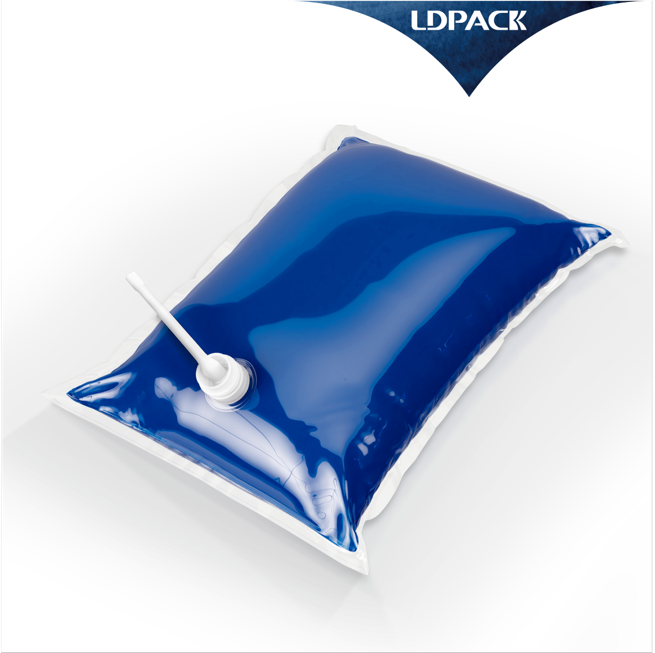
Foodservice Bag-in-Box Packaging
Professional customized BIB packaging perfectly fits the full-cycle operation needs of food service, solving the above pain points in one stop, and becoming an optimal substitute for traditional bottles, jerrycans and rigid containers:
- Full-process product protection: Customized barrier structures and sealed systems isolate oxygen, light and bacteria, adapting to long-term commercial storage and batch dispensing.
- Zero-waste high evacuation design: Matching scenario-based fitments and collapsible inner structures greatly reduce residual liquid, suitable for all viscosity liquids.
- Space-saving supply chain: Flat-packed empty packages save storage space, and compact filled structures improve pallet and transportation efficiency.
- High hygiene & safety: Food-grade exclusive structures and hygienic fitments avoid secondary pollution in repeated dispensing.
- Full-volume flexible adaptation: Covering 1L–220L capacity, compatible with small catering retail and large factory bulk liquid packaging.
- Custom branding & cost control: Large-area printable outer carton improves brand exposure, and lightweight structures reduce comprehensive packaging costs.
Scenario-Based BIB Selection Guide by Foodservice Liquid Type (Pain Point Avoidance + Landing Scheme)
The core of foodservice BIB selection is product scenario matching. Different liquid raw materials have completely different sensitivity, viscosity and storage requirements. The following is a targeted selection scheme and pitfall summary for mainstream foodservice liquids.
1. Foodservice BIB Packaging for Wine (Restaurants, Hotels, Catering Events)
Core product pain points: Wine is extremely sensitive to oxygen exposure; improper packaging leads to flavor deterioration, color fading and taste loss; traditional bottled wine is inconvenient for large-batch catering dispensing and inventory management.
Key customized BIB structure requirements:
- High oxygen barrier integrated structure to minimize air infiltration during storage and repeated dispensing, locking wine flavor and quality stably.
- Anti-corrosion and constant-flow professional wine taps to achieve uniform quantitative dispensing by staff, avoiding waste caused by manual pouring errors.
- Collapsible inner structure to realize synchronous contraction with liquid output and isolate external air.
Selection avoidance tips: Do not choose low-barrier general structures and ordinary universal spouts. Prioritize customized structures according to wine type, target shelf life and catering dispensing frequency to avoid quality attenuation during peak business periods.
2. Foodservice BIB Packaging for Juice & Beverage Concentrates
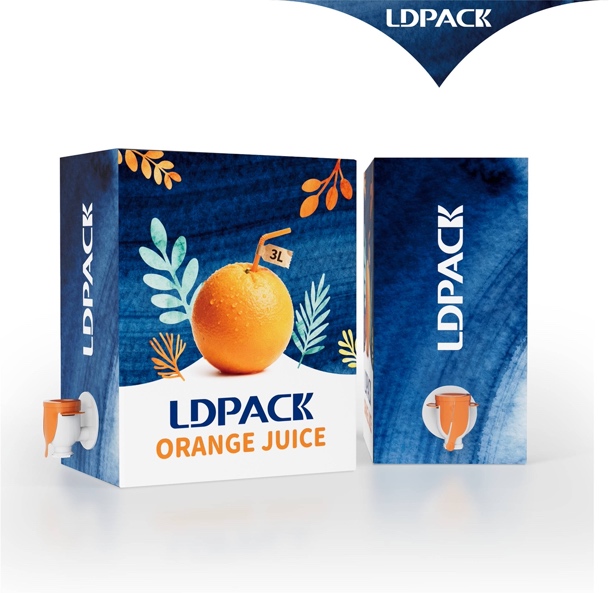
Core product pain points: Fruit juice and beverage concentrates are prone to oxidation, aroma volatilization and light deterioration; bulk catering use requires frequent replenishment, and scattered small packages cause low operational efficiency.
Key customized BIB structure requirements:
- Dual oxygen and light barrier structure to effectively prevent juice discoloration, taste deterioration and aroma loss, adapting to long-term refrigerated and ambient storage.
- High-tightness sealing structure to avoid moisture intrusion and microbial contamination.
- Quick-dispensing fitments compatible with commercial beverage equipment to improve catering beverage preparation efficiency and achieve high product evacuation.
Selection avoidance tips: Do not ignore aroma barrier performance for low-viscosity beverages. Avoid thin single-layer structures with poor sealing, which are easy to leak and deteriorate in humid catering environments.
3. Foodservice BIB Packaging for Dairy Products
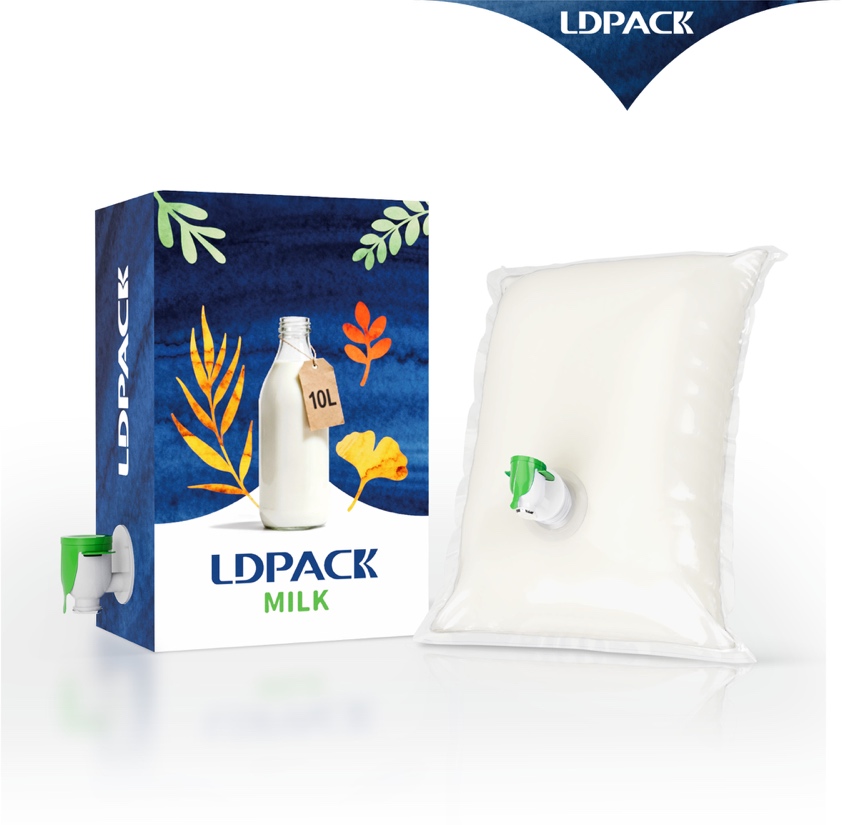
Core product pain points: Liquid dairy products such as milk and cream have strict hygiene requirements, are extremely easy to breed bacteria and deteriorate, and have high requirements for filling sterilization and storage temperature.
Key customized BIB structure requirements:
- Food-grade sterile contact structure, compliant with international food safety standards, no harmful precipitation.
- High-barrier anti-oxidation and antibacterial structure to delay dairy deterioration and extend commercial shelf life.
- Hygienic special fitments and high-strength sealing structure to avoid bacterial invasion during repeated dispensing.
- High-temperature sterilization resistant structure, compatible with dairy hot filling and sterilization processes.
Selection avoidance tips: Never use ordinary industrial or general food structures for dairy packaging. Must verify food-grade certification and sterilization resistance to avoid large-scale product deterioration losses.
4. Foodservice BIB Packaging for Sauces & Condiments
Core product pain points: Sauces, mayonnaise, salad dressings and syrups have high and variable viscosity; ordinary spouts are prone to blockage, adhesion and residual liquid, resulting in serious product waste and frequent package replacement.
Key customized BIB structure requirements:
- High-toughness anti-adhesion inner structure to reduce viscous liquid adhesion and improve overall evacuation rate.
- Large-caliber anti-blocking customized fitments, adapting to high-viscosity liquid flow characteristics to solve blockage and uneven outflow problems.
- Good oil corrosion resistance and stable sealing structure to avoid leakage and deterioration of oil-containing sauces.
Selection avoidance tips: The biggest misunderstanding is matching low-viscosity universal spouts for sauces. Viscosity must be used as the core basis for fitment and structural customization to reduce long-term catering operating costs.
5. Foodservice BIB Packaging for Bulk Liquid Ingredients
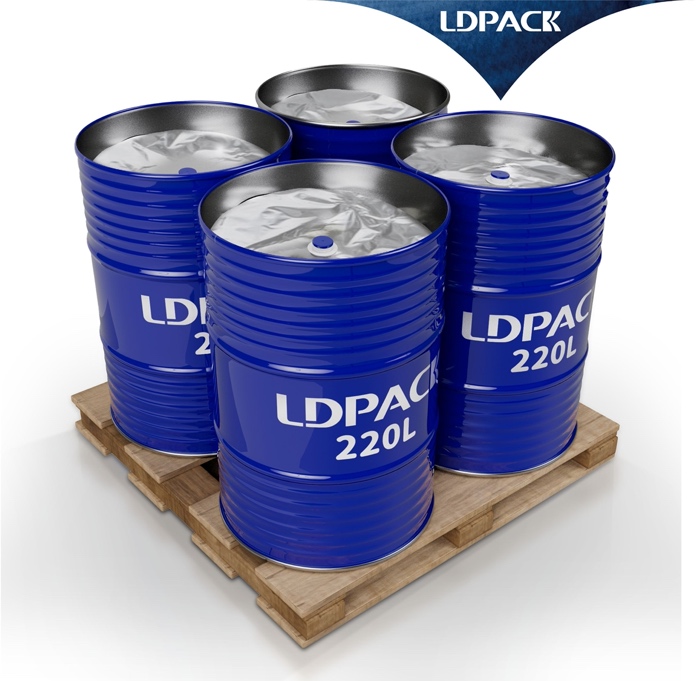
Foodservice BIB Packaging for Bulk Liquid Ingredients
Core product pain points: Commercial kitchens and food factories need large-batch edible oil, beverage base liquid, fruit preparations and liquid ingredients; standard small-capacity packages have low efficiency, and mismatched structures cannot adapt to automated production lines.
Key customized BIB structure requirements:
- Reinforced heavy-duty structure for 10L–220L large-capacity scenarios, with strong compression resistance, drop resistance and puncture resistance, adapting to harsh logistics and stacking storage.
- Equipment adaptive interface fitments, compatible with industrial automated filling and pipeline continuous dispensing.
- Customized structural specifications matched with production process, storage conditions and handling standards.
Selection avoidance tips: Large-capacity bulk liquid packaging cannot adopt lightweight retail structures. It is necessary to customize mechanical strength and structural specifications according to actual operating scenarios to avoid package rupture and liquid leakage.
Critical Selection Factor: BIB Fitment & Dispensing System Matching (Avoid Dispensing Failure)
Many companies only pay attention to BIB structural protection performance and ignore fitment matching, which leads to unsmooth dispensing, residual waste, hygiene risks and equipment incompatibility. As the core functional component of foodservice BIB packaging, the fitment directly determinesflow stability, product evacuation rate, hygiene level and equipment compatibility.
Landing matching rules for foodservice scenarios:
- Manual catering dispensing: Adopt anti-drip self-closing taps, easy for staff to operate, prevent dripping pollution, suitable for restaurants and cafes.
- Semi-automatic quantitative dispensing: Choose constant-flow valves to realize standardized portion control, suitable for chain catering and institutional kitchens.
- Industrial automated dispensing: Custom special interface fitments to match pipeline equipment and high-speed filling production lines.
- High-viscosity liquid dispensing: Exclusive large-diameter anti-blocking fitments to solve blockage and residue problems.
Core avoidance point: Fitment selection must be linked with product viscosity, dispensing mode and production process. Universal accessories will definitely lead to scenario adaptation failure.
How to Choose the Optimal BIB Package Size for Foodservice
Blindly pursuing large capacity or small specification is a common selection mistake. The optimal BIB size needs to be comprehensively matched according to catering consumption volume, storage conditions, dispensing frequency and logistics mode.
- 1L–10L small and medium capacity: Suitable for cafes, boutique restaurants and small catering institutions, balancing storage convenience and fresh use.
- 10L–50L medium and large capacity: The mainstream specification for chain catering and hotel kitchens, suitable for daily batch consumption.
- 50L–220L super large capacity: Exclusive for food processing factories and large centralized catering projects, realizing low-cost bulk liquid storage and use.
Foodservice BIB vs. Traditional Rigid Containers: Pain Point & Advantage Comparison
Compared with glass bottles, plastic jerrycans and other rigid containers, customized foodservice BIB packaging solves multiple industry pain points and has obvious comprehensive advantages:
|
Core Requirement |
Foodservice BIB Packaging |
Traditional Rigid Containers |
|
Large-volume liquid handling |
Excellent, integrated large-capacity design |
Good, scattered packaging with low efficiency |
|
Empty package storage |
Flat-packed, ultra-space-saving |
Bulky, occupies large warehouse space |
|
Dispensing experience & waste control |
Custom fitment, high evacuation, zero residue |
Manual opening easy to waste, poor control |
|
Product-to-package ratio |
Ultra-high, maximize product utilization |
Low, large container residual space |
|
Logistics & transportation efficiency |
High pallet utilization, low transportation cost |
Low, limited by fixed container volume |
|
Customization flexibility |
Full-structure customizable |
Single structure, limited adjustment |
|
Sustainability & recyclability |
Mono-material optional, low carbon and eco-friendly |
Material single, poor recyclability |
7 Core Parameters for Foodservice BIB Customization
To eliminate packaging failure and resource waste fundamentally, foodservice enterprises must confirm 7 core parameters before selecting BIB suppliers, to realize one-stop accurate customization:
1. Product attribute: Clarify liquid type (wine, juice, dairy, sauce, bulk raw material), viscosity, oil content and pH value.
2. Product sensitivity: Confirm oxygen resistance, light resistance, aroma retention, temperature resistance and microbial sensitivity requirements.
3. Target shelf life: Determine barrier structure grade according to storage cycle and catering turnover rate.
4. Filling process: Confirm cold/hot filling, sterilization mode, filling speed and production equipment parameters.
5. Dispensing mode: Clarify manual, semi-automatic or fully automatic dispensing to match exclusive fitments.
6. Package capacity: Select specifications according to daily consumption, storage space and logistics frequency.
7. Sustainability demands: Confirm recyclable structure, lightweight design and green packaging certification requirements.
LDPACK Custom Foodservice BIB Packaging Solutions
Focusing on the pain points of foodservice liquid packaging, LDPACK provides full-scenario customized bag-in-box packaging solutions for food service, covering 1L–220L full capacity range. We break the limitation of standard packaging, and tailor BIB structures and fitment systems for wine, juice, dairy, sauces and bulk liquid ingredients according to customer scenarios.
Our optional solutions include high-barrier anti-deterioration structures, food-grade sterile structures, reinforced heavy-duty structures and recyclable mono-material PE structures, matched with anti-blocking, anti-drip and quantitative customized fitments. All products pass food safety certification, adapt to various catering production, storage and dispensing environments, and help foodservice enterprises reduce waste, control costs and improve operational efficiency.
Conclusion
The core of foodservice BIB packaging selection is not to choose universal standard products, but to complete scenario-based customized matching of structure, fitment and capacity according to product characteristics and catering operation pain points. Excellent bag-in-box packaging can solve multiple industry problems such as product deterioration, residual waste, low logistics efficiency and hygiene risks for restaurants, hotels and catering enterprises.
LDPACK focuses on customized foodservice BIB system development, balancing product protection, dispensing efficiency, supply chain cost and sustainable performance. We provide exclusive packaging solutions for all types of foodservice liquid products, helping brands form competitive operational advantages.
FAQs for Foodservice Bag-in-Box Packaging
Q: Is bag-in-box packaging suitable for commercial restaurants?
A: Yes. Customized foodservice BIB packaging is very suitable for restaurant bulk liquids such as wine, juice, sauces and syrups. It features convenient dispensing, low waste and high storage efficiency, which is far more suitable for commercial scenarios than traditional rigid packaging.
Q: Can BIB packaging be used for foodservice wine dispensing?
A: Absolutely. BIB is a mature mainstream solution for catering wine packaging. Custom high-barrier structures and professional wine tap fitments can effectively lock wine quality and realize stable quantitative dispensing.
Q: Is BIB packaging safe for foodservice dairy products?
A: Yes. Professional dairy-grade BIB structures adopt sterile food-grade materials and antibacterial barrier design, matching hygienic fitments and sterilization processes, which fully meet foodservice dairy safety standards.
Q: What is the best BIB size for foodservice use?
A: There is no universal standard size. The optimal specification is determined by actual consumption volume, storage conditions, dispensing frequency and logistics mode.
Q: Can BIB packaging solve high-viscosity sauce blockage and residue problems?
A: Yes. By customizing anti-adhesion structural design and large-caliber anti-blocking fitments, BIB systems can completely solve sauce blockage and residual waste pain points, achieving high evacuation rate.
Q: Is foodservice BIB packaging recyclable?
A: It depends on the packaging structure and local recycling infrastructure. LDPACK's mono-material PE BIB structure has excellent recyclable performance, meeting global green packaging and carbon reduction requirements.