
Common Issues and Solutions for Recyclable Retort Pouches
Recyclable retort pouches can protect shelf stable foods while helping brands move away from hard to separate flexible laminates. However, changing the material structure does not remove the demands of filling, sealing, sterilization, storage, and transport. A pouch may look satisfactory before processing yet develop wrinkles, leakage, delamination, or weaker barrier performance after retort.
The practical answer is to evaluate the whole filled package. Start with the product, retort cycle, equipment, target shelf life, and local recycling requirements. Test the selected pouch with the actual product, process, and distribution route. Use the steps below to diagnose failures and prepare for commercial production with less risk.
Five Common Retort Pouch Problems and How to Fix Them
1. Delamination, Bubbling, and Excessive Wrinkling
Delamination occurs when bonded layers separate. It may appear as bubbles, cloudy areas, loose film, or peeling near a seal. Severe wrinkles can create stress around critical areas.
Possible causes include incomplete adhesive curing, incompatible shrinkage, trapped moisture, excessive residual air, or an unsuitable retort cycle. Record the defect location and when it appeared. Compare bond strength before and after retort, then review curing, loading, temperature, pressure, and cooling records.
The correction may require another film structure, revised curing, less residual air, even retort loading, or controlled cooling. Repeat the complete process before approval.
2. Weak Seals, Channel Leaks, and Contaminated Seal Areas
A seal can fail because it is weak, uneven, folded, or contaminated. Sauce, oil, powder, fibers, or moisture may form a narrow channel. Raising seal temperature alone can distort the film without removing the cause.
Inspect seal width, wrinkles, contamination, burned areas, and jaw impressions. Use suitable seal strength, burst, vacuum, bubble, or dye tests. Compare failures by filling head, sealing jaw, machine lane, and production time.
Control filler drip, clean the seal area, stabilize fill height, align the jaws, and adjust temperature, pressure, or dwell time. Establish a sealing window and define when operators must isolate production.
3. Swelling, Bursting, and Pouch Deformation
Excessive swelling stresses seals and corners. Bursting may result from residual air, overfilling, inadequate overpressure, restricted circulation, or pressure changes during cooling. Hot pouches may also deform when stacked too soon.
Measure fill weight, pouch thickness, headspace, and residual air. Compare retort records with the scheduled process and note when each failure occurs. Heating and cooling failures can have different causes.
Consult the process authority before changing a scheduled thermal process. Corrections may include better air removal, tighter fill control, suitable spacing, protected loading, and validated counterpressure. Recheck seal integrity after cooling.
4. Barrier Loss, Pinholes, and Flex Cracks
A pouch may survive sterilization yet lose protection during storage. Heat, folding, abrasion, sharp food pieces, or vibration can cause pinholes and flex cracks, leading to oxidation, color change, moisture loss, or shorter shelf life.
Test oxygen and water vapor transmission after retort when critical. Add suitable leak detection. Distribution trials should use filled pouches, actual cartons, planned stacking, and realistic handling. Inspect corners and contact areas.
Solutions may include a stronger PP structure, revised dimensions, gentler loading, carton dividers, or less movement inside the case. Confirm that changes still meet destination market recycling criteria.
5. Spout Leaks, Print Distortion, and Poor Appearance
Spouted packaging adds a critical seal. The spout, cap, film, and process must remain compatible through heating and cooling. Poor alignment, contamination, weak local sealing, or uneven shrinkage can cause leaks. Heat may also affect inks, flatness, and color.
Inspect the complete fitment circumference in different pouch orientations. Include opening, cap torque, drop, compression, and leak checks where relevant. Evaluate print and odor after retort.
Traditional Multilayer and Mono PP Retort Pouches Compared
|
Decision point |
Traditional multilayer pouch |
Mono PP recyclable design |
|
Structure |
Several polymers and sometimes aluminum divide the required functions |
PP is the main material, with compatible functional components |
|
Barrier |
High barrier options are well established |
Barrier must be balanced with recycling design and shelf life |
|
Retort behavior |
Mature structures are available for many processes |
Shrinkage, sealing, stiffness, and impact require project testing |
|
Recycling |
Different bonded materials are difficult to separate |
A dominant PP structure can improve compatibility with PP recycling streams |
|
Main selection question |
Does the structure protect the food through its shelf life? |
Does it protect the food and meet the target market's recycling criteria? |
Neither format should be selected from a label alone. Compare performance using the same product, process, storage period, and transport conditions.
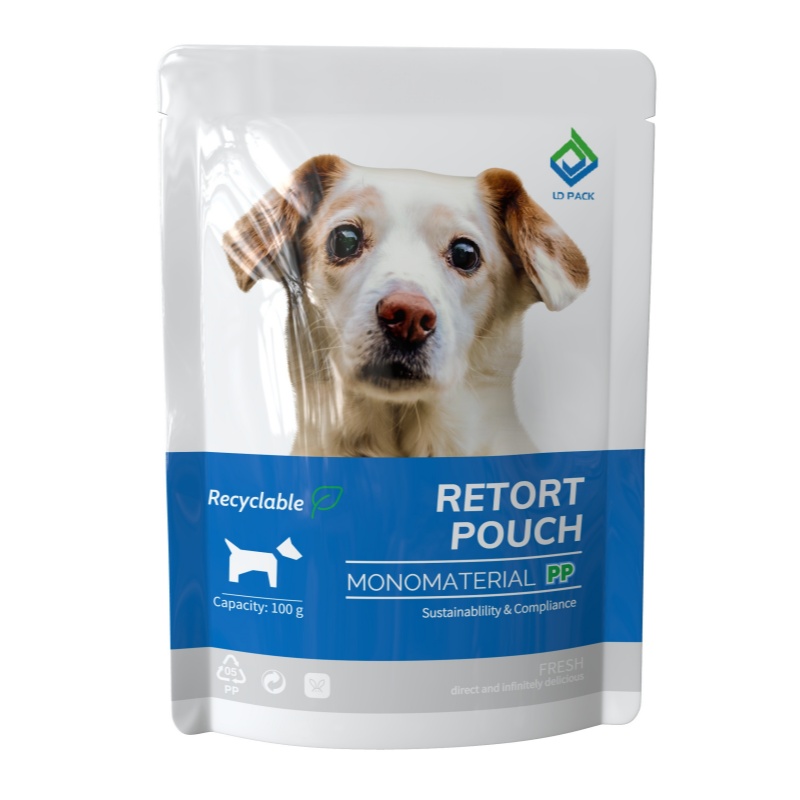
Validation Checklist Before Commercial Production
Define the Real Operating Conditions
Document the food type, pH, oil content, particle size, fill temperature, fill weight, pouch size, target shelf life, and storage environment. Record the scheduled retort temperature, time, pressure, and cooling method. These inputs allow a packaging manufacturer to recommend a relevant starting structure.
Establish a Reliable Sealing Window
Run trials across practical combinations of temperature, pressure, dwell time, and line speed. Check seal strength and integrity after retort. Include samples from startup, steady production, stoppages, and restarts because machine conditions can change.
Test the Finished Package
Evaluate appearance, dimensions, seal strength, burst resistance, leakage, delamination, puncture resistance, and fitment performance. Measure oxygen and moisture barrier after processing when the product requires those controls. Use retained samples for shelf life evaluation.
Complete Line and Distribution Trials
Confirm machinability on the intended filling line and process filled pouches in the commercial retort. Pack them in the proposed cartons and conduct handling, compression, vibration, and drop trials suited to the distribution route. Document acceptance limits before launch.
Record every trial with sample codes, machine settings, retort charts, test results, and photographs. This evidence makes supplier discussions clearer and prevents the same failure from returning during later commercial production runs.
Match the Solution to the Application
Wet pet food may contaminate the sealing zone and contain pieces that press against the pouch. Ready meals, sauces, and soups may demand different barrier levels, fill temperatures, and opening formats. Spouted products add fitment sealing, cap performance, and pouring behavior to the qualification plan. Food for special medical purposes may require additional controls and market specific documentation.
When requesting a proposal, provide the product, pouch style, dimensions, fill weight, retort cycle, filling and sealing equipment, barrier target, shelf life, printing needs, order quantity, and destination market. If values are not yet available, identify them as development items instead of selecting a structure from assumptions.
Three Misconceptions That Cause Costly Decisions
1. Mono material does not mean every component is chemically identical. Inks, adhesives, coatings, and closures still need evaluation.
2. Surviving one retort run does not prove shelf life or production consistency. Commercial trials and retained samples remain necessary.
3. A pouch designed for recycling will not be collected and recycled in every location. Claims should reflect the package construction and the recycling system available to the customer.
Frequently Asked Questions
Q1. Are Recyclable Retort Pouches Actually Recyclable?
A: They can use a dominant polymer such as PP to improve recycling compatibility. Collection, sorting, and reprocessing depend on local facilities and rules, so confirm claims for each sales region.
Q2. What Causes Retort Pouch Delamination?
A: Common causes include incomplete adhesive curing, incompatible layer shrinkage, moisture, residual air, excessive heat, and unsuitable cooling. Examine defect location and compare bond strength before and after retort.
Q3. Why Do Seals Leak After Sterilization?
A: Food contamination, wrinkles, poor jaw alignment, or unsuitable sealing temperature, pressure, and dwell time can create weak areas. Inspect the seal and use validated integrity tests to identify the cause.
Q4. Can a Mono PP Pouch Withstand 121°C Retort Processing?
A: Some structures are designed for this condition. LDPACK lists up to 121°C for 30 minutes for its recyclable retort pouch. Suitability still depends on the complete filled package and scheduled process.
Q5. Which Tests Should Be Completed After Retort?
A: Typical checks include visual inspection, seal strength, burst or pressure testing, leak detection, delamination, puncture resistance, barrier performance, fitment integrity, and application specific distribution testing.
Q6. What Should I Send a Packaging Manufacturer?
A: Send product details, pouch dimensions, fill weight, processing conditions, equipment information, target shelf life, barrier needs, printing requirements, destination market, and expected volume. These details make recommendations and quotations more useful.
Choosing the Right Recyclable Retort Pouch for Your Product
Begin with the failure stage, collect samples, and review production records before changing materials or machine settings. Then test the proposed correction on the actual filling line, through retort, transport, and shelf life.
LDPACK supplies recyclable flexible packaging in mono PE, mono PP, mono PET, and polyolefin based structures, including recyclable retort pouch formats. To discuss a project, send your food type, pouch size, filling method, retort cycle, target shelf life, and destination market.