
PPWR Recyclability Grades Explained for Flexible Packaging
The EU Packaging and Packaging Waste Regulation, known as PPWR, is changing how brands design, source and document packaging for the European market. For food, beverage, pet food and home care brands using flexible packaging, the impact is especially important: conventional multi-material pouches may face higher compliance risk, while recyclable mono-material pre-made pouches are becoming a practical path forward.
PPWR applies to all packaging placed on the EU market and begins to apply from 12 August 2026. By 2030, packaging must meet recyclability requirements based on Design for Recycling criteria, and from 2035 the assessment will also consider whether packaging is recycled at scale.
At LD PACK, we help global brands transition from conventional flexible packaging to high-performance recyclable pouch structures designed for PE, PP or polyolefin recycling streams.
What Is PPWR?
PPWR is the EU’s regulation on packaging and packaging waste. It sets sustainability, recyclability, labelling and waste-reduction requirements for packaging placed on the EU market. The regulation was published as Regulation (EU) 2025/40 and will apply from 12 August 2026.
One of the most important changes is that all packaging must be recyclable by 2030. The European Commission explains this as a shift toward packaging that can be designed, collected, sorted and recycled more effectively instead of being landfilled or incinerated.
For flexible packaging buyers, PPWR affects:
- Material selection
- Pouch structure design
- Barrier and coating choices
- Labels, closures, zippers and spouts
- Recyclability documentation
- Supplier qualification
- Long-term packaging roadmaps
What Are PPWR Recyclability Grades?
Under PPWR, packaging recyclability is expressed in performance grades A, B and C. Grade A means the packaging unit is at least 95% recyclable by weight. Grade B means at least 80% recyclable by weight. Grade C means at least 70% recyclable by weight. Packaging below 70% is considered technically non-recyclable and will face market restrictions.
|
PPWR Grade |
Recyclability by weight |
What it means for buyers |
|
Grade A |
≥95% |
Best long-term target |
|
Grade B |
≥80% |
Strong compliance position |
|
Grade C |
≥70% |
Minimum threshold from 2030, but phased out from 2038 |
|
Below C |
<70% |
Technically non-recyclable |
A common misunderstanding is that PPWR uses A-to-E grades. Some market commentary uses D or E to describe poor recyclability, but the legal text in Annex II defines A, B and C, with anything below 70% treated as technically non-recyclable.
PPWR Timeline: What Packaging Buyers Need to Know
PPWR is not only a future issue. Packaging redesign, shelf-life validation, filling-line trials and supplier qualification can take many months. Buyers should start evaluating high-risk flexible packaging structures now.
|
Date |
PPWR milestone |
Buyer action |
|
2026 |
PPWR applies from 12 August 2026 |
Map packaging portfolio and suppliers |
|
2028 |
Design for Recycling criteria expected |
Reassess current pouch structures |
|
2030 |
Packaging must reach Grade A, B or C |
Replace structures below 70% recyclability |
|
2035 |
Recycled-at-scale assessment added |
Confirm real collection, sorting and recycling compatibility |
|
2038 |
Grade C no longer allowed |
Target Grade A or B for long-term market access |
The regulation states that from 2030, packaging cannot be placed on the EU market unless it is recyclable within grades A, B or C, and from 2038 it must be recyclable within grades A or B.
Why PPWR Matters for Pre-Made Pouches
Flexible packaging often delivers excellent performance with less material than rigid packaging, but many traditional pouch structures use multiple materials, such as PET, aluminum foil, nylon and PE. These layers can be difficult to separate in recycling systems.
For PPWR-ready pouch design, the goal is to simplify the structure while maintaining product protection, shelf appeal and packing-line performance.
Pre-made pouches are widely used because they combine convenience, product protection and strong shelf impact. Common formats include:
- Stand-up pouches
- Flat bottom pouches
- Quad seal pouches
- Spout pouches
- Retort pouches
- Three-side seal pouches
- Shaped pouches
However, many traditional pouches rely on combinations of different materials to achieve barrier and mechanical performance. These structures can be difficult to recycle because the layers are not always compatible with a single recycling stream.
PPWR creates a clear direction: future-ready pouch packaging should simplify material structures wherever possible while maintaining product safety and performance.
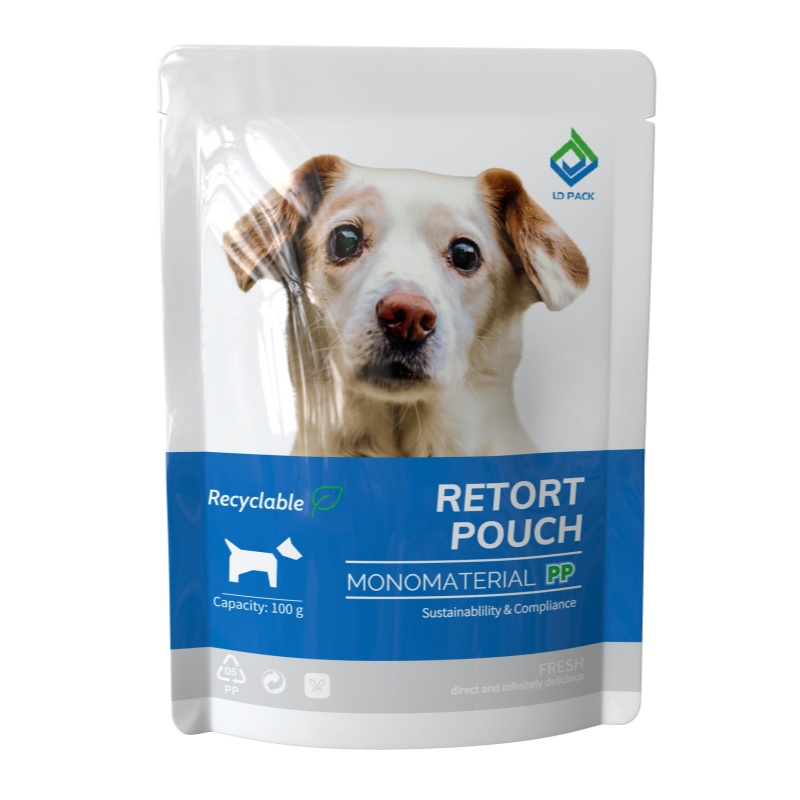
What Makes Packaging “Recyclable” Under PPWR?
PPWR does not judge recyclability only by the main packaging material. The regulation considers whether packaging can be effectively collected, sorted and recycled into secondary raw materials that can replace primary raw materials.
Key design factors include:
- Material composition
- Separability of components
- Compatibility of closures and small parts
- Inks and lacquers
- Adhesives
- Coatings and barriers
- Labels and sleeves
- Colours and additives
- Product residue
- Sorting and recycling performance
The regulation’s design-for-recycling approach looks at the complete packaging unit, not just one layer or one component.
For flexible packaging, this is why a pouch should be assessed as a full system: film structure, zipper, spout, cap, printing, coating and product residue all matter.
How PPWR Affects Pre-Made Pouches
PPWR does not ban pre-made pouches. Instead, it changes how pre-made pouches should be designed and evaluated.
A pre-made pouch may face higher PPWR risk if it uses:
- Complex multi-material laminates
- Non-compatible barrier layers
- Metallised or aluminium layers that reduce recyclability
- Closures that are incompatible with the main material
- High-coverage inks or coatings that affect sorting or recyclate quality
- Components that are difficult to separate or recycle
A PPWR-oriented pre-made pouch should aim for:
- Simplified material structure
- Higher recyclable content by weight
- Compatibility with the intended recycling stream
- Reduced use of problematic components
- Clear technical documentation
- Verified product protection performance
The goal is not to weaken packaging performance. The goal is to redesign packaging so that performance and recyclability can work together.
How Buyers Can Prepare for PPWR
Packaging buyers should treat PPWR as a structured packaging roadmap.
Step 1: Map Your Packaging Portfolio
List all pouch formats, material structures, product categories and EU-bound SKUs.
Step 2: Identify High-Risk Structures
Prioritise packaging that uses complex multi-material laminates, aluminium layers, difficult closures or hard-to-recycle components.
Step 3: Ask for Recyclability Data
Request the estimated recyclable percentage by weight and supporting technical information.
Step 4: Review Components as a System
Do not assess only the main film. Review spouts, zippers, valves, caps, inks, coatings and labels together.
Step 5: Start Pilot Testing Early
Before commercial launch, test barrier performance, sealing, filling-line compatibility, drop resistance and shelf life.
Step 6: Build a 2030–2038 Roadmap
Do not stop at Grade C. Since Grade C will be phased out from 2038, buyers should plan toward Grade A or Grade B where technically feasible.
How LD PACK Supports PPWR-Ready Flexible Packaging
LD PACK provides sustainable, high-performance flexible packaging solutions for global brands. Its recyclable packaging solutions include mono-material structures designed to support recyclability goals while maintaining barrier performance, pouch functionality and commercial production efficiency.
LD PACK’s recyclable packaging range covers formats such as recyclable stand-up pouches, recyclable spout pouches, recyclable retort pouches, recyclable quad seal pouches and recyclable flat bottom pouches.
For PPWR-focused projects, LD PACK can support buyers with:
- Recyclable pre-made pouch development
- Mono-material structure recommendations
- Barrier and sealing performance optimisation
- Pouch format customisation
- Printing and appearance adjustment
- Technical support for global B2B packaging projects
LD PACK also highlights global service capability, including 35 years of experience, 25,000 annual capacity, 600 employees, 30 regions served and 250 brands served.
Conclusion
PPWR recyclability grades give flexible packaging buyers a clear way to judge future compliance risk. Grade A means at least 95% recyclable by weight, Grade B at least 80%, and Grade C at least 70%. For pre-made pouches, the safest strategy is to move away from complex multi-material laminates and toward recyclable mono-material PE, PP or polyolefin structures. Starting early helps brands protect EU market access, reduce redesign pressure and build a stronger 2030–2038 packaging roadmap.
FAQ
Q1. Do PPWR rules mean flexible pouches will be banned in the EU?
A: No. PPWR does not ban flexible pouches, but it requires packaging to meet recyclability standards. Poorly recyclable multi-material pouches may face higher compliance risk.
Q2. What recyclability grade should buyers target?
A: Grade A or Grade B is the safest long-term target. Grade C may meet the minimum threshold from 2030, but it will no longer be allowed from 2038.
Q3. Are mono-material pouches suitable for products that need strong barrier protection?
A: Yes, in many cases. Mono-material PE, PP or polyolefin structures can be designed with barrier, sealing and pouch performance in mind, but product testing is still necessary.
Q4. What pouch components can affect PPWR recyclability?
A: Films, zippers, spouts, caps, inks, coatings, adhesives, labels and product residue can all influence the final recyclability assessment.
Q5. When should brands start preparing for PPWR?
A: Brands should start now. Packaging redesign, shelf-life testing, filling-line trials and supplier qualification can take months or longer, especially for food, pet food and home care products.